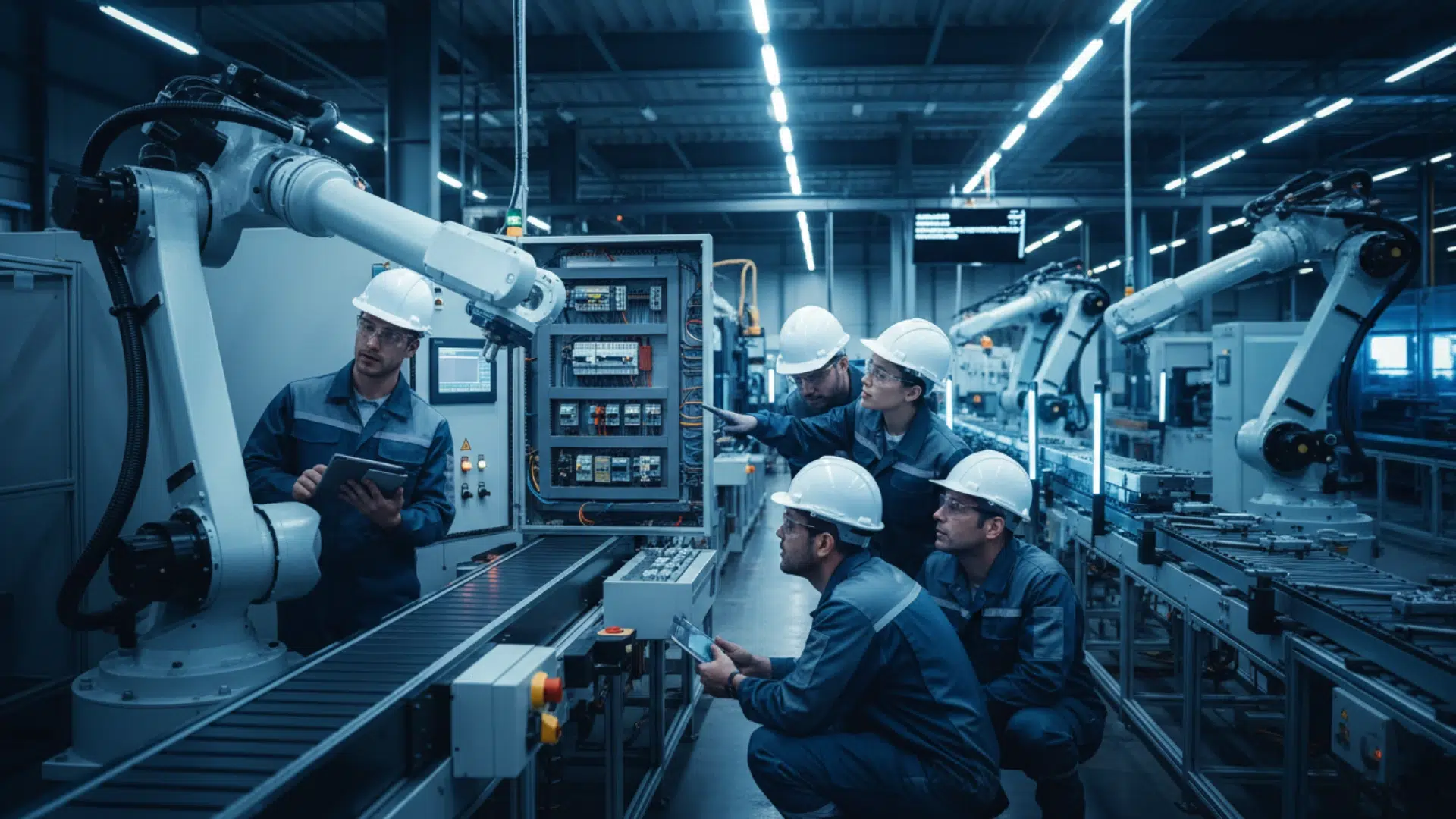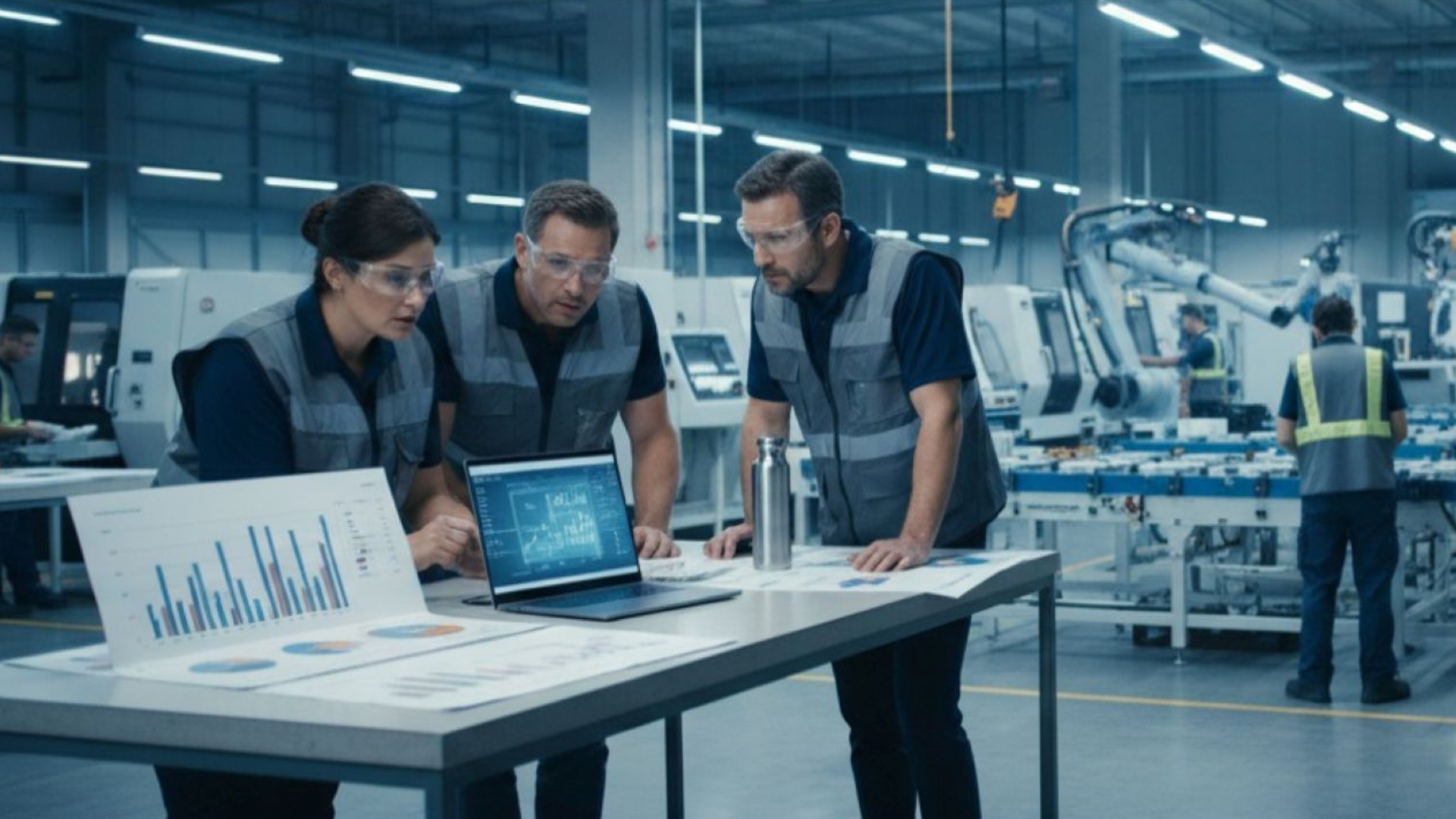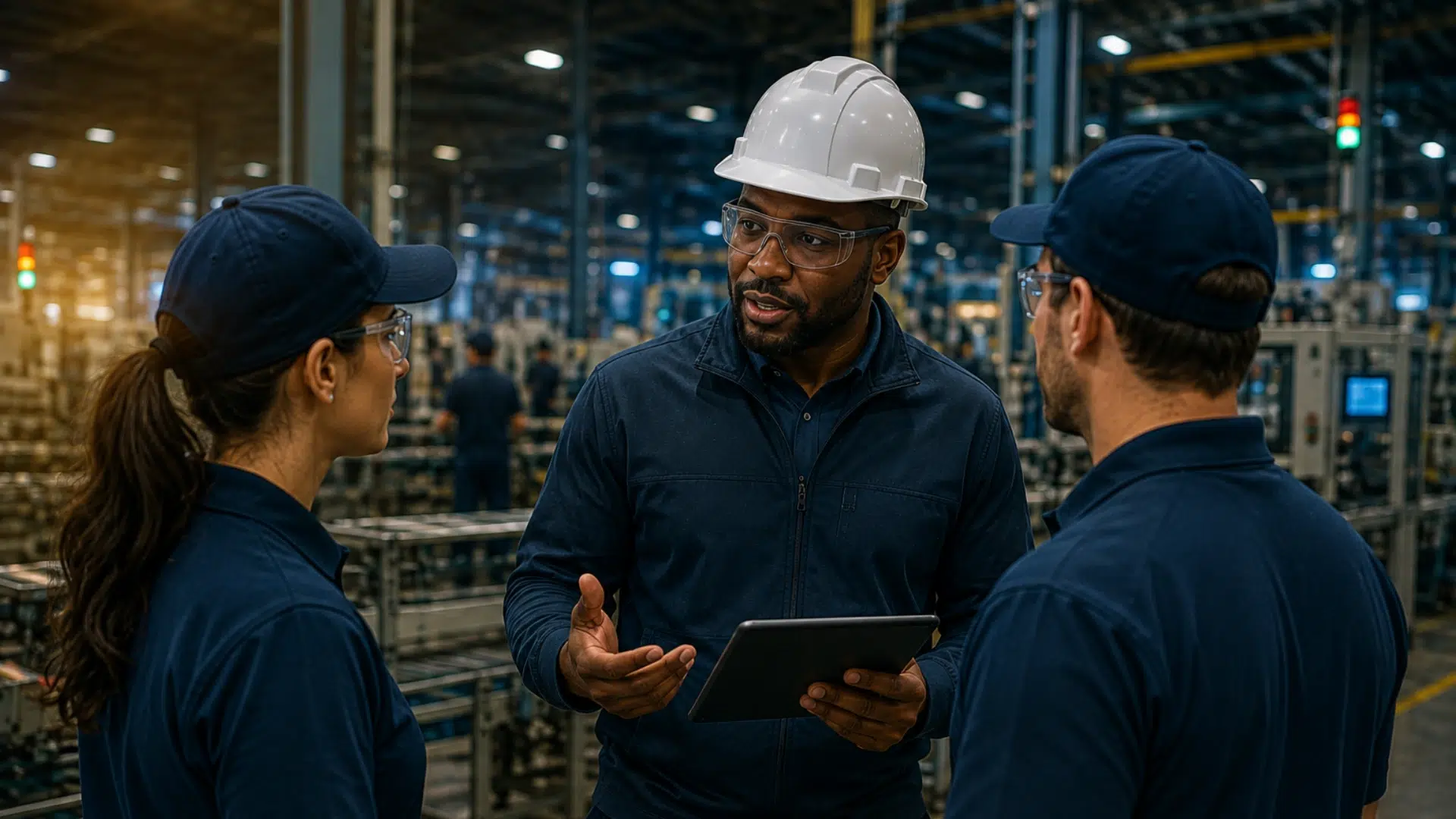
Securing employees who are suitable for the organization poses another huge challenge for manufacturers. Making the wrong hiring choices will result in high turnovers, disruptions in the production schedule, reduced efficiency of the teams, and costs incurred during training. Conversely, having insufficient number of employees might lead to delays in production and overtime costs.
This is the reason why the temp-to-hire staffing concept has become increasingly popular among many manufacturing organizations. Instead of directly hiring a permanent employee, the organization can evaluate the performance of the prospective employee before making a long-term commitment. This approach gives manufacturers greater flexibility while supporting more informed manufacturing hiring decisions.
Temp-to-perm manufacturing staffing can be an effective component of a broader temporary workforce solution, particularly for organizations that need to balance hiring speed with long-term workforce quality.
temp-to-hire manufacturing proves to be an effective solution for many manufacturing sites, warehouses, auto assembly lines, and other industries that experience high volumes of hiring needs.
What Is Temp-to-Perm Staffing for Manufacturing?
Temp-to-perm staffing is a recruitment strategy that entails recruiting workers who first work on a temporary basis via a staffing agency, which may eventually become permanent workers once a successful trial period is completed. In contrast with conventional recruiting, this method allows employers to evaluate employees in actual working environment before making a decision to hire.
Recruitment, screening, training, and payroll for the temporary employee fall under the jurisdiction of the temp staffing agency. When both employer and employee feel that there is a perfect match, the worker gets hired permanently.
For manufacturers, temp-to-perm manufacturing staffing provides an opportunity to evaluate attendance, productivity, safety, reliability, and workplace fit before committing to permanent hiring. It can therefore reduce some of the uncertainty associated with conventional recruiting while supporting more stable manufacturing workforce development.
When Is Temp-to-Perm Manufacturing Staffing the Right Fit?
Not every manufacturing position requires immediate permanent hiring. Temp-to-perm staffing works especially well in situations where evaluating real world performance is essential.
Recurring Production Roles and Manufacturing Hiring Needs
Many manufacturing companies have production jobs which need reliable presence, good work, and proper performance. Using temp-to-perm placement helps in ensuring that the employees hired can perform at par with the expectations from day one itself.
For recurring production roles, this approach can support production continuity while giving supervisors sufficient time to evaluate whether a temporary worker is suitable for permanent employment.
Uncertain Demand and Temporary Workforce Solutions
The customers’ demands could vary depending on seasons, shifts in supply chains, and other factors. Hence, companies have the liberty of scaling up or down their workforce and being flexible until there is certainty about production volumes.
This flexibility makes temporary workforce solutions useful when manufacturers need additional labor but are not yet ready to make permanent hiring decisions.
Growth Periods and Scalable Manufacturing Staffing
Growing facilities or launching production units usually involve hiring many people at once. Employers don’t have to hire people permanently at one shot but can shift them gradually.
A temp staffing agency can help organizations build workforce capacity during these growth periods while managers evaluate which workers have the skills and performance required for long-term positions.
Assessing Work Habits Before Permanent Hiring
Interviews rarely reveal how employees perform under production pressure.
Temp assignments allow supervisors to observe:
- Attendance
- Teamwork
- Safety compliance
- Productivity
- Learning ability
- Reliability
This real-world evaluation is one of the primary advantages of temp-to-hire manufacturing.
High-Volume Manufacturing Hiring and Temp-to-Hire Staffing
Large manufacturing operations frequently hire dozens of employees at once. Temp-to-hire manufacturing programs simplify recruiting while improving long-term employee conversion rates.
When Is Temp-to-Perm Staffing a Good or Poor Fit?
| Best Fit | Poor Fit |
| Recurring production roles | Executive leadership positions |
| Warehouse operations | Highly confidential strategic roles |
| Assembly line staffing | Immediate permanent management needs |
| Automotive production | Specialized short term consultants |
| Seasonal growth with long term potential | One day or event based labor |
| High volume hiring | Fixed duration project work |
Temp-to-perm manufacturing staffing is particularly relevant when employers want to evaluate workers before making a permanent commitment. For specialized leadership or immediately permanent roles, direct placement may be more appropriate.
When Is Another Staffing Model Better for Manufacturing?
While temp-to-perm staffing is highly effective, it is not always the best solution.
| Staffing Model | Best Used For |
| Temp-to-Perm Staffing | Evaluating long-term employees before hiring |
| Temporary Staffing | Seasonal demand and short-term production spikes |
| Direct Placement | Experienced professionals ready for immediate permanent employment |
| Contingent Staffing | Flexible workforce during uncertain demand or project-based work |
Choosing the right staffing model depends on production goals, hiring urgency, and workforce planning strategies.
Manufacturers may also use contingent staffing when they need flexible labor without an immediate intention to convert workers to permanent employees. In contrast, direct hire or direct placement is better suited to positions where the organization has already determined that a permanent employee is required.
What to Evaluate During a Temp-to-Perm Manufacturing Assignment
Successful employee conversion involves more than measuring productivity. Supervisors should evaluate employees across several performance areas.
Performance
- Output consistency
- Quality standards
- Accuracy
Attendance
- Punctuality
- Absenteeism
- Schedule flexibility
Safety
- PPE compliance
- Following operating procedures
- Incident prevention
Teamwork
- Communication
- Collaboration
- Positive attitude
Learning Ability
- Speed of training
- Adaptability
- Willingness to improve
Reliability
- Dependability
- Accountability
- Problem solving skills
Evaluating these factors creates a more complete picture of long term success than interviews alone. It also helps manufacturers determine whether a temporary worker is likely to become a reliable long-term member of the manufacturing workforce.
Why Do Strong Temporary Workers Fail to Convert to Permanent Employees?
Even highly qualified temporary employees sometimes do not become permanent staff.
Common reasons include:
- Poor onboarding experiences
- Limited communication with supervisors
- Unclear performance expectations
- Lack of career growth opportunities
- Scheduling conflicts
- Weak cultural fit
- Inconsistent feedback during the evaluation period
Many of these challenges can be addressed through regular manager check-ins and structured performance reviews.
A structured approach to conversion can strengthen workforce resilience by helping manufacturers identify strong employees before making permanent hiring decisions.
How to Use a 30/60/90-Day Employee Conversion Framework
A structured evaluation process helps managers make objective hiring decisions.
| Evaluation Period | Primary Focus | Success Indicators |
| First 30 Days | Training and onboarding | Attendance, safety compliance, learning speed |
| 60 Days | Independent performance | Productivity, quality, teamwork |
| 90 Days | Long term readiness | Leadership potential, reliability, cultural fit |
Using this framework creates consistency across departments and reduces subjective hiring decisions.
For organizations using temp-to-perm manufacturing staffing, a 30/60/90-day framework can also provide a clear structure for employee conversion and help managers determine when a temporary worker is ready for permanent employment.
How a Staffing Partner Improves Manufacturing Hiring and Conversion
An experienced staffing partner contributes much more than recruiting candidate .
They help manufacturers improve conversion success by:
- Pre screening qualified applicants
- Matching candidates with workplace culture
- Managing on boarding documentation
- Monitor attendance and performance
- Collecting supervisor feedback
- Resolving issues before they affect retention
- Supporting employee engagement throughout the assignment
Such a continuous relationship helps to avoid hiring delays while increasing the probability of successful employee conversion. Manufacturers collaborating with competent staffing agencies have higher chances to retain employees since hiring is done considering employees’ workplace performance and not just interviews.
The right temp staffing agency can also help manufacturers combine temporary hiring flexibility with longer-term workforce planning, creating a more deliberate path from temporary employment to permanent staffing.
Building a Stronger Manufacturing Workforce With Temp-to-Perm Staffing
In today’s manufacturing industry, a balance between speed and quality in hiring processes should be maintained. This can be done by using temp-to-perm staffing.
From helping manufacturing facilities to expanding warehouse staff, from staffing automotive manufacturing to working in high volume hiring environment this staffing strategy will help companies to minimize hiring risks while creating a stable workforce.
In case of clear performance requirements, proper evaluations and a competent staffing agency, temp-to-hire manufacturing strategy becomes one of the most effective ways to create reliable production teams.
FAQs About Temp-to-Perm Manufacturing Staffing
What is temp-to-perm staffing?
In the context of temp-to-perm staffing, an employee starts as a temporary employee through a staffing agency and then moves to become a permanent one according to his/her performance and suitability in an organization.
When is temp-to-perm a good fit for manufacturing?
It is mostly used for production jobs that occur regularly, warehousing, auto manufacturing, times of company growth, unpredictable production needs, and high-volume hiring when the employer wants to test the worker first
How long should the evaluation period last?
The typical period for manufacturers is 30/60/90 days.
How can employers improve conversion rates?
Organizations should be able to raise their conversion rates by organizing the process of onboarding; clarifying the performance standards; providing feedback regularly; making evaluations objective; rewarding good performance; and working together with a professional staffing company.